
$7.99
On Hold
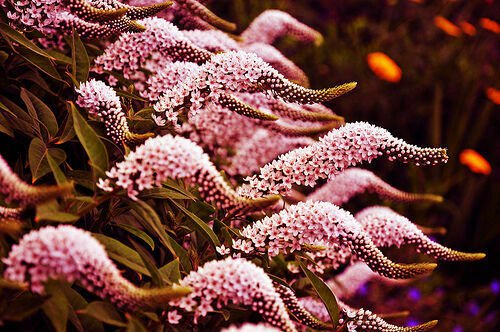
Light Pink Lysimachia Seeds
3 available
Details
Shipping: Australia: $12.00 (more destinations)
Sales Tax: check
Condition: Brand new
*The store has not been updated recently. You may want to contact the merchant to confirm the availability of the product.
There is a wide variety of hardy perennials for your garden border or bed. Growing gooseneck loosestrife provides dimension and diversity to these areas. What is gooseneck loosestrife? Gooseneck loosestrife (Lysimachia clethroides) is an herbaceous plant with a funny name and from zones 3 to 8. Gooseneck loosestrife flowers arch appealingly in slender racemes and it is practically fool proof in management and care.
Loosestrife is in the family Lythrum. Loosestrife comes in pink, yellow, white and purple. The purple loosestrife varieties are considered slightly invasive in some zones and gooseneck loosestrife can also be very aggressive in certain regions. It is wise to check with your extension service to see if your variety is appropriate for your area. There are several loosestrife gooseneck varieties, but the garden loosestrife variety is the most recommended for growing. These have the characteristic bend at the end of the gooseneck loosestrife flower stems. In fact, the plant gets its descriptive name from the gooseneck loosestrife flowers on their arching stems, which bear a slight crook at the end. The gooseneck loosestrife plant is low growing and spreads to about 3 feet, which makes it an excellent ground cover. It is in the same family as primroses and prefers sunny to partially sunny locations. Leaves are slender and come to a point, and gooseneck loosestrife flowers are tiny and white. The perennial is not native to North America but has adapted well to most zones in the United States. The plant survives winter with a layer of mulch around the base and leaves turn an attractive gold in fall.
Loosestrife is in the family Lythrum. Loosestrife comes in pink, yellow, white and purple. The purple loosestrife varieties are considered slightly invasive in some zones and gooseneck loosestrife can also be very aggressive in certain regions. It is wise to check with your extension service to see if your variety is appropriate for your area. There are several loosestrife gooseneck varieties, but the garden loosestrife variety is the most recommended for growing. These have the characteristic bend at the end of the gooseneck loosestrife flower stems. In fact, the plant gets its descriptive name from the gooseneck loosestrife flowers on their arching stems, which bear a slight crook at the end. The gooseneck loosestrife plant is low growing and spreads to about 3 feet, which makes it an excellent ground cover. It is in the same family as primroses and prefers sunny to partially sunny locations. Leaves are slender and come to a point, and gooseneck loosestrife flowers are tiny and white. The perennial is not native to North America but has adapted well to most zones in the United States. The plant survives winter with a layer of mulch around the base and leaves turn an attractive gold in fall.


